Racial and ethnic AAA disparities
Racial and ethnic disparities in abdominal aortic aneurysm evaluation and treatment rates in Texas
Summary
This study combined epidemiologic and geospatial analyses of inpatient and outpatient care for intact and ruptured abdominal aortic aneurysms at Texas hospitals and clinics from 2006 through 2014. Area-level data were supplemented with six additional sources to estimate repair rates, AAA-related clinic and ultrasound visits, travel distance to providers, and the location and number of unrecognized aneurysms.
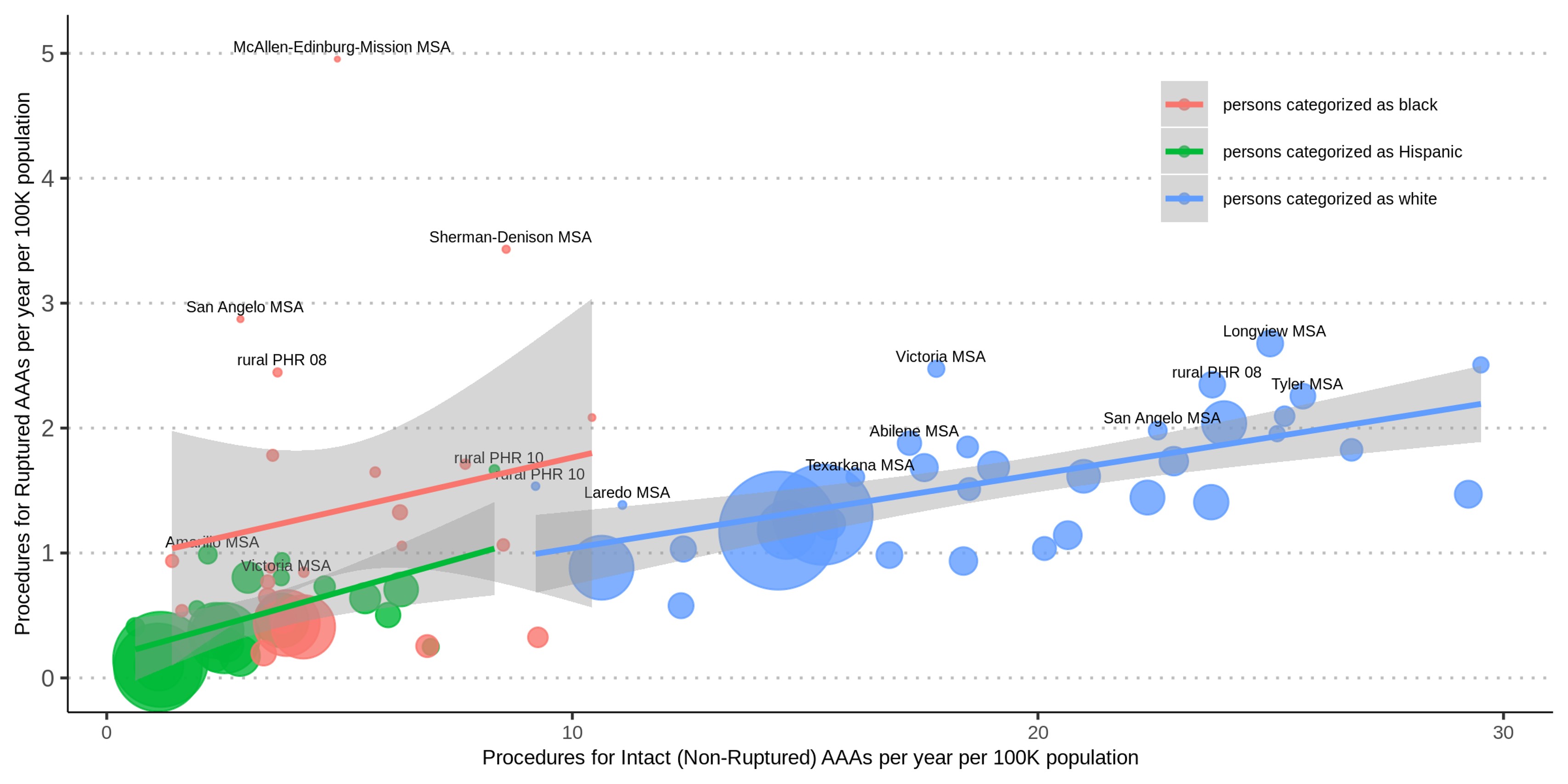
Most AAA repairs occurred among White men aged 65 to 84 years living in large metropolitan areas. Regional rates of ruptured and intact AAA repair were strongly correlated (R2=0.47). Persons categorized as Black had lower rates of AAA-related clinic visits and ultrasound examinations, and several regions had disproportionately high ratios of ruptured to intact AAA repair, mainly affecting Black Texans.
Contribution and significance
The analysis used race- and ethnicity-specific ratios of emergency repair for ruptured AAAs to elective repair for intact AAAs within geographic areas to identify disparities that statewide averages could obscure.
This approach also generated practical information for directing screening toward groups and locations where AAAs were more likely to remain unrecognized. The outpatient data provided a potential explanation for the observed disparity: persons categorized as Black were much less frequently seen for AAA-related clinic care and screening ultrasound than persons categorized as White.
The findings support multiple focused screening strategies rather than a single population-wide approach, with particular attention to improving access to AAA evaluation among Black Texans.