Diagnostic accuracy of non-invasive PAD testing
Lower-extremity pressure, staging, and grading thresholds to identify chronic limb-threatening ischemia
Summary
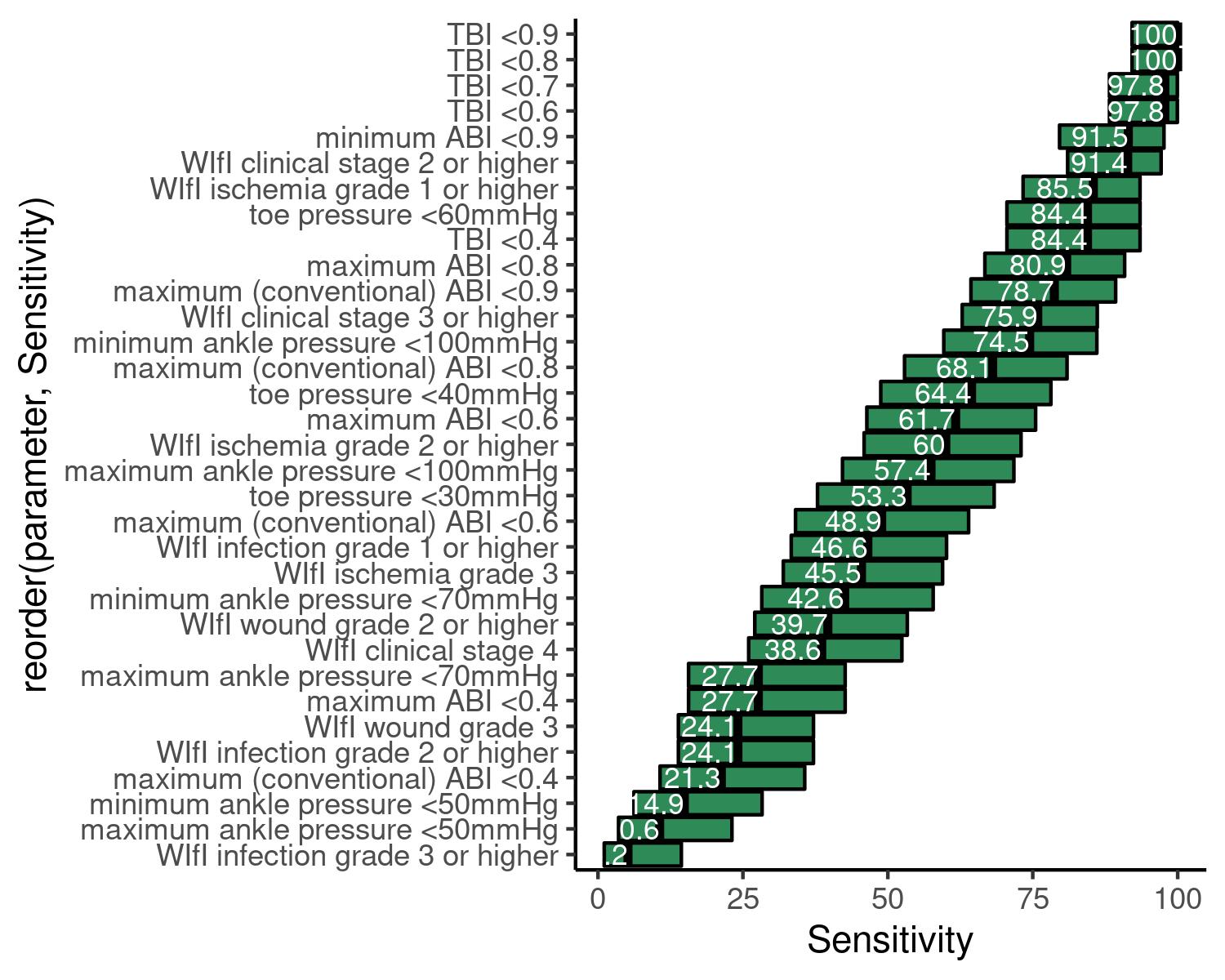
Alternative noninvasive arterial testing parameters improved sensitivity for detecting peripheral artery disease. A toe-brachial index below 0.7 and the lower of the two ipsilateral ankle-brachial indices below 0.9 were highly sensitive for identifying GLASS stage II or III angiographic disease. Abnormal noninvasive results should prompt consideration of diagnostic angiography to characterize the arterial anatomy of the affected limb.
Contribution and significance
This study directly compared clinical and noninvasive testing parameters with digital subtraction angiography, using GLASS stages and angiosome-level arterial anatomy as the reference. This approach assessed whether commonly used bedside and vascular-laboratory findings reliably identify the arterial disease that limb-salvage specialists consider when deciding whether revascularization is appropriate.
The findings reinforce an important clinical distinction: abnormal noninvasive results can help rule in peripheral artery disease, but normal results do not reliably rule it out. The sensitivity of many parameters was only poor to moderate, and pedal medial artery calcification further reduced the sensitivity of most measurements. Consequently, apparently normal testing should not by itself lead clinicians to dismiss significant arterial disease in a patient with foot ulceration, infection, or gangrene.