Non-random polymicrobial cooccurrence patterns
Polymicrobial foot infection patterns are common and associated with treatment failure
Summary
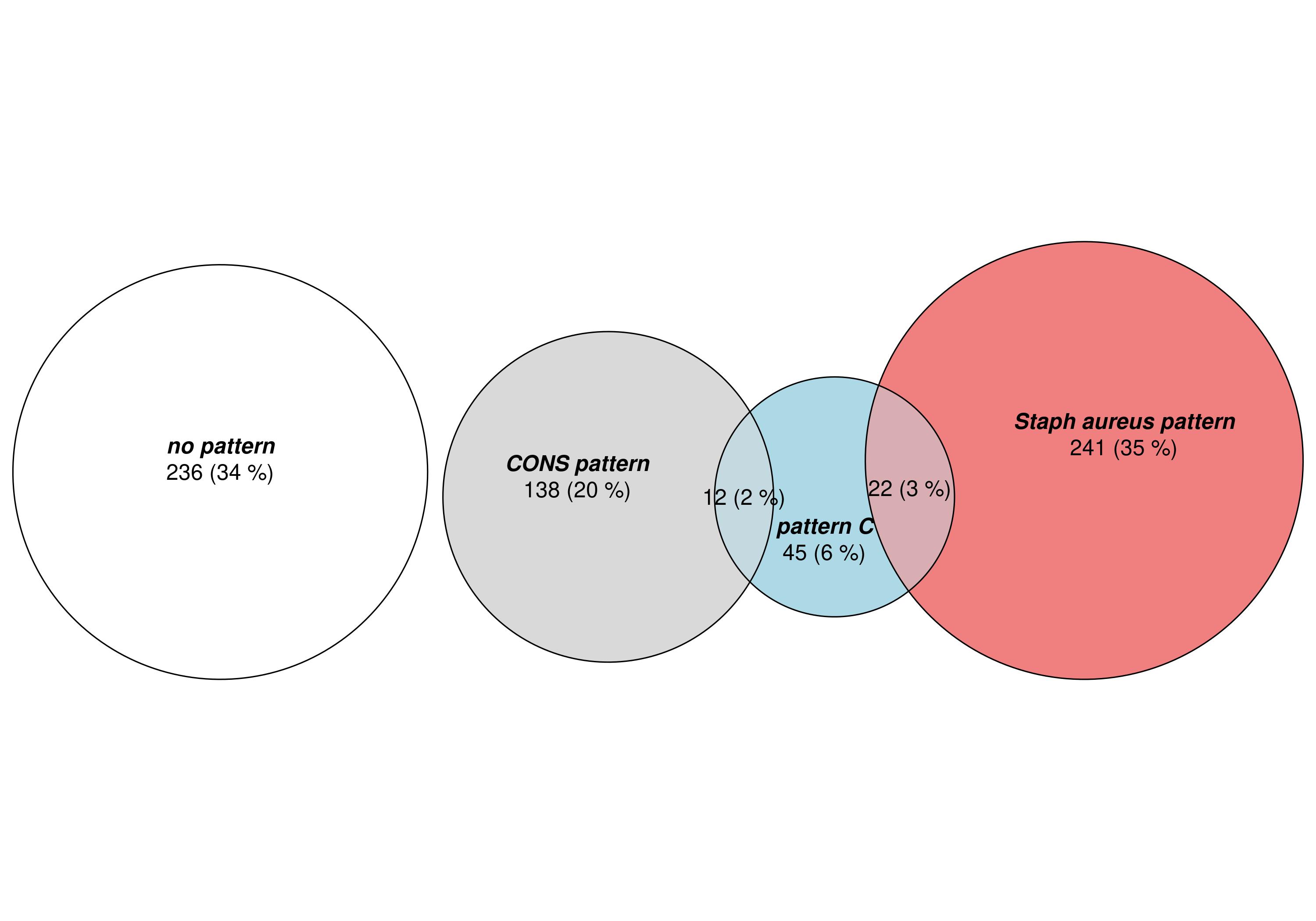
Several nonrandom microbial co-occurrence patterns are frequently seen in foot infection specimens. One pattern containing many Proteobacteria species may indicate a higher risk of treatment failure. Staphylococcus aureus rarely co-occurs with other staphylococci.
Contribution and significance
This was the first analysis to ask whether the organisms found together in polymicrobial foot infections co-occur nonrandomly. Because the research question was novel, the work brought together clinical, microbiological, and biostatistical expertise. The analysis used observed-to-expected ratios, Markov and conditional random fields, and factor analysis to identify recurring patterns.
Polymicrobial pattern C was associated with treatment failure, giving the finding direct clinical prognostic significance. The infrequent co-occurrence of Staphylococcus aureus with non-aureus staphylococcal species also raises the possibility that MRSA and MSSA coverage may not always be necessary when these non-aureus species have been identified.
Related materials
The supplement provides a detailed analysis of foot infection microbiology, including microbial isolates in monomicrobial and polymicrobial infections, bone and non-bone specimens, and specimens obtained from the foot and other anatomical sources.