Racial and geographic disparities in Texas leg amputations
Racial and geographic variation in leg amputations among Texans
Summary
This study used Texas hospital-discharge data to examine racial, geographic, and hospital-level variation in the initial treatment of peripheral artery disease from 2004 through 2009. Among 21,273 initial procedures, 16,898 were revascularizations and 4,375 were above-ankle amputations.
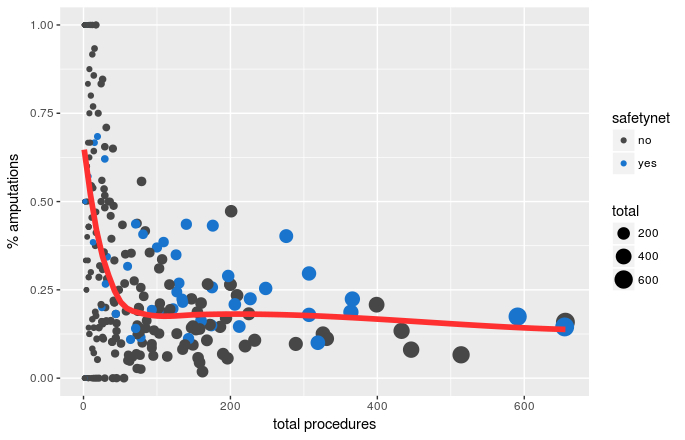
Primary amputation was associated with Black race (odds ratio [OR], 1.79), Hispanic ethnicity (OR, 1.42), Medicaid coverage (OR, 1.89), and treatment at a low-volume hospital (OR, 1.78); all associations had p<0.001. Four geographic regions had particularly high amputation rates, and 72 of 349 hospitals (21%) reported no revascularization procedures for this population.
Contribution and significance
The analysis identified specific Texas regions where amputation-prevention education, screening, and clinical resources could be targeted rather than relying only on statewide averages.
It also demonstrated a strong relationship between hospital experience and treatment patterns: low-volume hospitals had higher amputation rates, and more than one in five hospitals reported no revascularization. These findings point to opportunities for earlier referral and stronger connections to limb-salvage expertise.
Finally, the study documented persistent disparities affecting Black and Hispanic Texans. Potential responses include community and clinician education, accessible vascular screening, and routine foot examinations for people at high risk of limb loss.